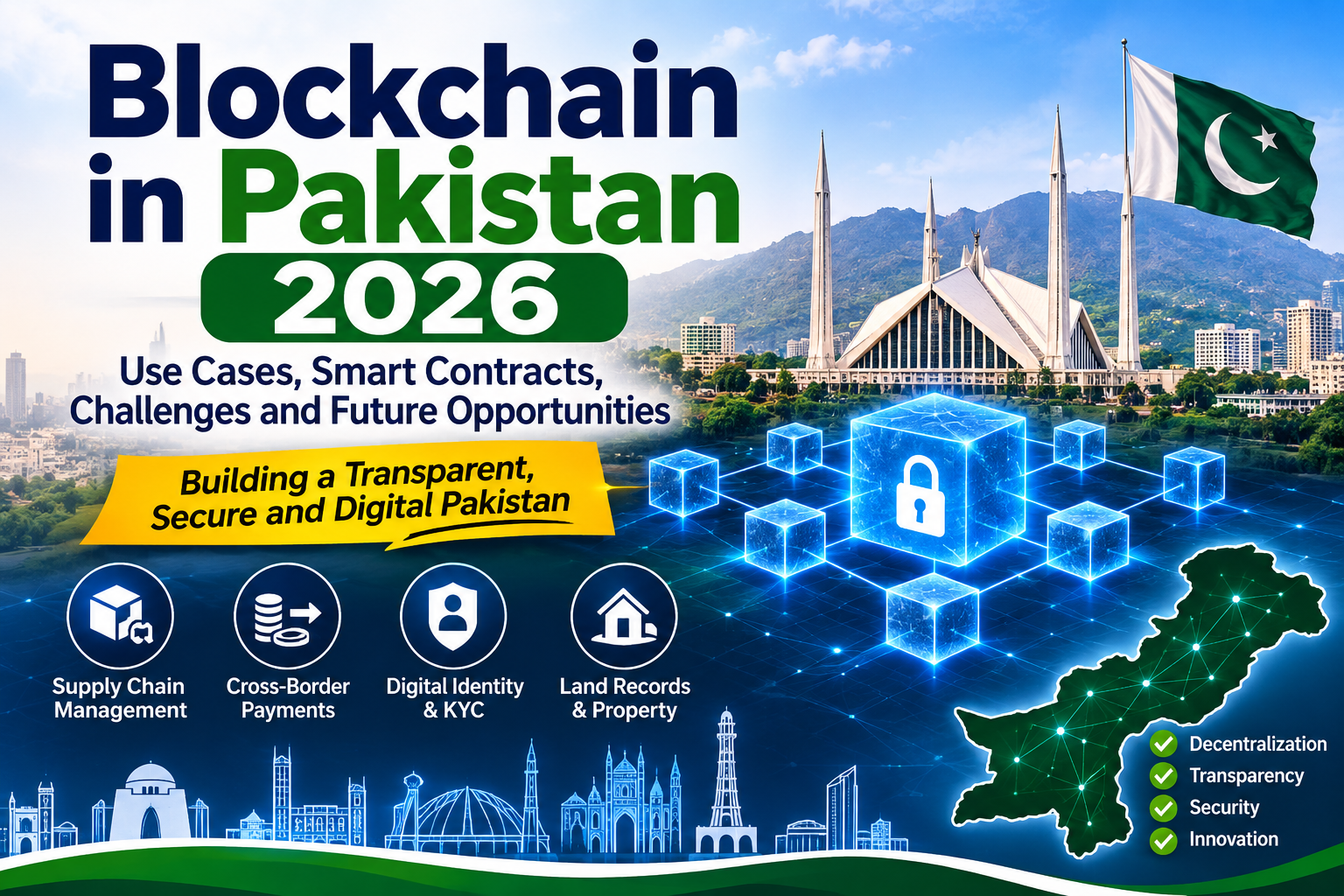
Blockchain in Pakistan 2026: Use Cases, Smart Contracts, Challenges, and Future Opportunities
What Is Blockchain?
Blockchain is a distributed ledger technology that records transactions across multiple computers within a network. Instead of storing information in one central database, blockchain distributes records among participating computers, making transactions easier to verify and more difficult to alter without detection.
Each block typically contains transaction data, a timestamp, and a cryptographic reference to the previous block. These connections form a chain of records that helps maintain the integrity of the information.
Key characteristics of blockchain include:
-
Decentralization: Information can be maintained across multiple network participants rather than controlled by one central authority.
-
Transparency: Authorized participants can access and verify shared transaction records.
-
Immutability: Recorded information is designed to resist unauthorized changes, although the level of protection depends on the blockchain's architecture.
-
Security: Cryptographic techniques help protect transactions and verify the integrity of records.
Why does it matter? Blockchain is not limited to cryptocurrencies. It can support business applications involving digital identity, supply chain tracking, financial transactions, document verification, and automated agreements.
Blockchain in Pakistan in 2026
Pakistan's digital economy is evolving, creating opportunities to explore blockchain and other emerging technologies. Financial institutions, technology companies, startups, and government organizations can potentially use distributed ledger systems to improve transparency, automate processes, and strengthen digital services.
An important development is the introduction of the Virtual Assets Act, 2026, which establishes the Pakistan Virtual Assets Regulatory Authority (PVARA). The legislation provides a framework for regulating virtual assets and virtual asset service providers. It also addresses the oversight of blockchain and distributed ledger technology adoption.
Businesses interested in understanding the regulatory framework can review the official Virtual Assets Act 2026.
The State Bank of Pakistan is also supporting financial technology innovation through its Regulatory Sandbox, which provides a controlled environment for testing innovative financial products, services, and business models.
Why Is Blockchain Gaining Attention?
Several factors are encouraging businesses to explore blockchain technology:
-
Increasing adoption of digital financial services.
-
Demand for secure and transparent transaction records.
-
Growing interest in financial technology and digital innovation.
-
Opportunities to improve supply chain visibility.
-
The need for efficient business processes and automated systems.
-
Potential applications in international trade and cross-border financial services.
However, blockchain adoption in Pakistan is still developing. Businesses should evaluate practical requirements, costs, security, and applicable regulations before investing in blockchain solutions.
Major Blockchain Use Cases in Pakistan
1. Supply Chain Management
Supply chain management is one of the practical areas where blockchain can provide value. Businesses often deal with multiple suppliers, distributors, warehouses, and retailers. Tracking information across these different stages can become complicated.
Blockchain-based systems can create shared records of product movement, delivery information, and verification activities.
For example, agricultural businesses could use blockchain to record information about where products were produced, how they were transported, and when they reached retailers.
Potential benefits include:
-
Improved product traceability.
-
Better coordination between suppliers and distributors.
-
Reduced opportunities for record manipulation.
-
Easier verification of product information.
-
Improved transparency for customers and business partners.
For Pakistan's agricultural, manufacturing, and export industries, these applications could help strengthen supply chain management.
2. Cross-Border Payments
Pakistan receives significant remittance inflows from overseas workers. Traditional international payment systems can involve multiple intermediaries, processing delays, and transaction charges.
Blockchain-based payment infrastructure may offer alternative ways to transfer and settle value internationally. Depending on the technology and regulatory arrangements, these systems could reduce processing time and improve transaction visibility.
Potential applications include:
-
International business payments.
-
Remittance processing.
-
Digital settlement systems.
-
Financial transactions between international partners.
However, blockchain-based payments are not automatically faster or cheaper in every situation. Their usefulness depends on network fees, liquidity, conversion costs, security, and regulatory approval.
3. Digital Identity and KYC
Know Your Customer (KYC) verification is essential for banks, financial institutions, and other businesses that provide regulated services.
Blockchain-based identity solutions could help individuals maintain verifiable digital credentials and share selected information with authorized organizations.
Potential advantages include:
-
More efficient identity verification.
-
Reduced duplication of documentation.
-
Better tracking of verification records.
-
Improved protection against certain forms of identity fraud.
Such systems would still need strong privacy controls, secure identity management, and compliance with Pakistan's applicable data protection and financial regulations.
4. Land Records and Property Management
Property transactions often require the verification of ownership documents, historical records, and legal information.
Blockchain could support property management systems by maintaining tamper-resistant records of ownership changes, document verification, and transaction history.
For example, a properly designed land-record platform could allow authorized parties to verify property-related records more efficiently.
Potential benefits include:
-
Better document traceability.
-
Reduced opportunities for unauthorized record changes.
-
Improved transparency in property transactions.
-
Easier verification of historical records.
However, blockchain cannot independently establish legal ownership or eliminate property disputes. Accurate source records, legal recognition, government oversight, and reliable verification procedures remain essential.
Smart Contracts in Pakistan
Smart contracts are digital agreements whose programmed instructions automatically execute when specified conditions are satisfied.
They can be developed using blockchain platforms and may reduce the need for manual processing in certain business operations.
Potential applications in Pakistan include:
Real Estate: Smart contracts could support automated rental payment arrangements, transaction conditions, and escrow-related workflows.
Insurance: Insurance platforms could automate selected claims processes when predefined conditions are verified.
Supply Chain: Businesses could trigger supplier payments after receiving verified delivery information.
Digital Services: Companies could automate subscriptions, licensing arrangements, and other recurring transactions.
Example: Basic Smart Contract Logic
The following is simplified pseudocode showing how an escrow payment system could work:
function releasePayment() {
    if (conditionMet) {
        // Release payment to the seller
        seller.transfer(amount);
    } else {
        // Follow the agreed refund process
        buyer.transfer(amount);
    }
}
This is an illustrative example, not production-ready smart contract code. Real implementations require secure programming, transaction validation, access controls, and testing.
Important: Smart contracts can automate specific contractual conditions, but they do not automatically eliminate legal disputes or the need for appropriate legal agreements.
Regulatory Landscape for Blockchain in Pakistan
Regulation is an important consideration for businesses exploring blockchain, cryptocurrency, tokenization, and digital financial services.
Pakistan's regulatory environment has developed significantly in 2026.
1. Pakistan Virtual Assets Regulatory Authority (PVARA)
The Virtual Assets Act, 2026 established PVARA as the dedicated authority responsible for licensing, regulating, and supervising virtual asset activities and service providers.
The framework addresses virtual asset operations, compliance requirements, consumer protection, and oversight of blockchain technology adoption.
Businesses planning virtual asset services should review the official PVARA regulatory framework before launching relevant products or services.
2. State Bank of Pakistan (SBP)
The State Bank of Pakistan plays an important role in regulating financial institutions and promoting responsible financial innovation.
Its Regulatory Sandbox supports controlled testing of innovative financial products and services.
In May 2026, SBP also issued instructions concerning the opening of bank accounts for PVARA-authorized virtual asset service providers and their customers.
3. Securities and Exchange Commission of Pakistan (SECP)
SECP supports innovation within Pakistan's non-banking financial sector.
Its Fintech Framework for the Non-Banking Sector in Pakistan provides guidance for financial technology innovation and regulatory considerations.
Businesses should identify the relevant regulator based on the specific activity they intend to conduct rather than assuming that every blockchain application falls under the same regulatory requirements.
Challenges and Opportunities of Blockchain Adoption
Although blockchain offers several potential advantages, businesses must consider its limitations before implementation.
Major Challenges
Lack of Awareness: Many businesses are still unfamiliar with blockchain architecture, practical applications, and implementation costs.
Shortage of Skilled Professionals: Developing secure blockchain applications requires expertise in programming, cryptography, distributed systems, and cybersecurity.
Infrastructure Requirements: Reliable internet connectivity, system availability, and suitable technical infrastructure are important for successful deployment.
Regulatory Compliance: Virtual asset and financial applications may involve licensing, identity verification, reporting, and other regulatory obligations.
Integration Costs: Connecting blockchain platforms with existing business software and databases can require significant technical planning.
Business Opportunities
Operational Efficiency: Automation and shared records can reduce repetitive administrative work.
Improved Transparency: Authorized participants can verify information through a common record system.
New Digital Products: Businesses can explore tokenization, digital identity solutions, and blockchain-powered applications where legally permitted.
International Competitiveness: Companies that understand emerging technologies may be better positioned to serve international customers and business partners.
The Future of Blockchain in Pakistan: What to Expect by 2030
Blockchain technology could become increasingly relevant to Pakistan's financial services, supply chains, manufacturing, and digital business infrastructure.
Several developments are worth watching:
-
Digital Financial Infrastructure: Financial institutions may explore new settlement and transaction technologies under applicable regulations.
-
Enterprise Blockchain Applications: Companies could adopt distributed ledgers for supply chain tracking, document verification, and internal processes.
-
Tokenization: Digital representations of eligible assets may create new opportunities under the country's regulatory framework.
-
Education and Training: Universities and technology training institutions may expand courses covering blockchain development and cybersecurity.
-
International Collaboration: Pakistani technology companies may work with international organizations to develop blockchain-based business solutions.
Blockchain adoption will depend on practical business value, reliable infrastructure, skilled professionals, and effective regulation. It should not be treated as a solution for every business problem.
How Businesses Can Prepare for Blockchain Technology
Businesses interested in blockchain should begin by identifying a genuine operational challenge rather than adopting the technology simply because it is trending.
A practical starting point includes:
-
Identify a process that requires better transparency, verification, or automation.
-
Evaluate whether blockchain is more suitable than a conventional database.
-
Assess technical requirements, security risks, and implementation costs.
-
Review applicable legal and regulatory requirements.
-
Build a small proof of concept before investing in a large-scale platform.
-
Test the solution and monitor its performance before wider deployment.
Companies that need to connect different digital platforms can also explore API integration services in Pakistan to support communication between business applications and external systems.
Conclusion
Blockchain presents opportunities for businesses in Pakistan, particularly in financial technology, supply chain management, digital identity, and automated business processes.
The country's evolving virtual asset regulatory framework is an important development, but successful blockchain adoption requires more than regulatory changes. Businesses must also consider security, technical expertise, costs, integration, and real-world requirements.
Companies exploring blockchain-powered platforms or other emerging digital solutions should work with experienced technology professionals to plan secure and scalable systems.
Global Dezigns provides website design, web development, web application, and API integration services that can help businesses strengthen their digital infrastructure and prepare for changing technology requirements.
View All Blogs